Volatility Patterns in Casino Game Categories: Insights for Regular Session Planning
Kai Jung · Aug 21, 2026

Volatility Patterns in Casino Game Categories: Insights for Regular Session Planning
Volatility describes the degree of fluctuation in outcomes across casino game categories, and researchers have documented distinct patterns that separate slots from table games and live dealer formats. Data from multiple jurisdictions shows that high-volatility titles produce larger swings in bankroll over shorter periods while low-volatility options maintain steadier results across extended play. Observers note that regular players benefit when these patterns inform decisions about session length and game selection rather than relying on general rules of thumb.
Defining Volatility Across Game Types
Volatility measures how widely results deviate from expected returns, and experts separate games into high, medium, and low categories based on empirical return distributions. Slots typically register the highest volatility because random number generators trigger infrequent but substantial payouts, whereas blackjack and certain video poker variants show lower volatility due to skill elements and fixed payout structures. Roulette falls in the medium range because even-money bets produce consistent but modest variance while single-number wagers increase swing potential.
Studies conducted by the University of Nevada, Las Vegas gaming research group have tracked thousands of sessions and confirmed that volatility rankings remain stable across different operators and regulatory environments. These findings allow session planners to predict how quickly a bankroll might experience drawdowns or recoveries when moving between categories.
Documented Patterns in Slots and Progressive Jackpots
High-volatility slots cluster toward the upper end of variance scales, and data indicates that sessions lasting under 30 minutes often produce either rapid depletion or outsized wins. Progressive jackpot games amplify this effect because contribution rates and trigger frequencies create additional layers of variance. Players who map these patterns frequently adjust their session targets to align with the expected frequency of bonus rounds rather than fixed time blocks.
Medium-volatility slots occupy a middle ground where base game hits occur often enough to sustain play while feature rounds introduce occasional spikes. Research teams analyzing operator data from multiple regions have observed that these titles support longer sessions without the extreme swings seen in high-volatility counterparts.
Table Games and Their Volatility Profiles
Blackjack exhibits the lowest volatility among common table games because optimal strategy reduces the house edge and produces results that cluster tightly around the theoretical return. Craps and baccarat occupy slightly higher positions on volatility charts because certain bet types introduce wider outcome spreads. Poker variants differ depending on whether players compete against the house or against other participants, with house-banked versions showing more predictable variance than player-versus-player formats.
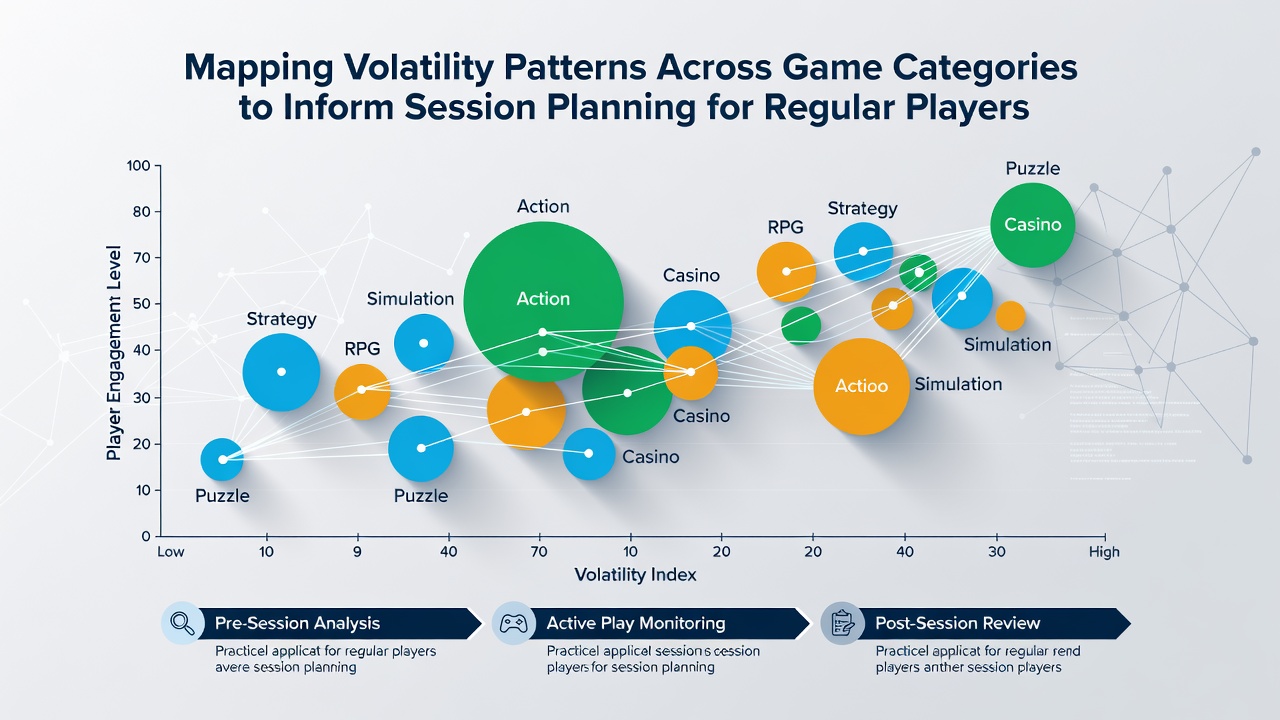
According to figures published by the Nevada Gaming Control Board, table game hold percentages remain consistent year over year, which supports the use of volatility maps when estimating session duration. Regular participants who review these statistics often allocate longer time windows to low-volatility table games and shorter windows to high-volatility options.
Live Dealer and Hybrid Formats
Live dealer games combine elements of table game mechanics with streamed presentation, and volatility patterns track closely with their in-person equivalents. Blackjack live dealer sessions display the same low-variance characteristics as land-based play, while live roulette wheels maintain medium volatility driven by bet selection. Hybrid formats that incorporate slot-like bonus features tend to shift volatility upward, and operators have reported increased session variability when these elements appear.
Those who study session data across platforms note that live dealer interfaces sometimes introduce minor timing differences that affect perceived pace without altering underlying volatility metrics. Mapping exercises therefore focus on game rules rather than delivery method when assigning categories.
Applying Volatility Maps to Session Planning
Regular players who construct volatility maps before sessions commonly set bankroll thresholds and time limits that correspond to each category's documented swing patterns. High-volatility blocks receive smaller allocations and shorter durations, whereas low-volatility blocks support extended play with measured bet sizing. Data from industry reports indicates that participants who follow these mappings experience fewer unplanned session terminations caused by rapid bankroll erosion.
Case examples compiled by researchers at the Australian Gambling Research Centre show that players who alternate between categories within a single visit often balance overall variance when they sequence high-volatility games early and low-volatility games later. This sequencing approach relies on the same volatility rankings used in standalone planning.
Conclusion
Mapping volatility patterns across game categories supplies regular players with an evidence-based framework for structuring sessions. Patterns documented in slots, table games, and live dealer environments remain consistent enough to guide decisions about duration, bankroll allocation, and game sequencing. Observers continue to track new data releases from regulatory bodies and academic centers to refine these maps as game libraries evolve.