Slot Game Volatility and Bankroll Strategies Across Online Varieties
Kai Jung · Oct 22, 2026
Slot Game Volatility and Bankroll Strategies Across Online Varieties
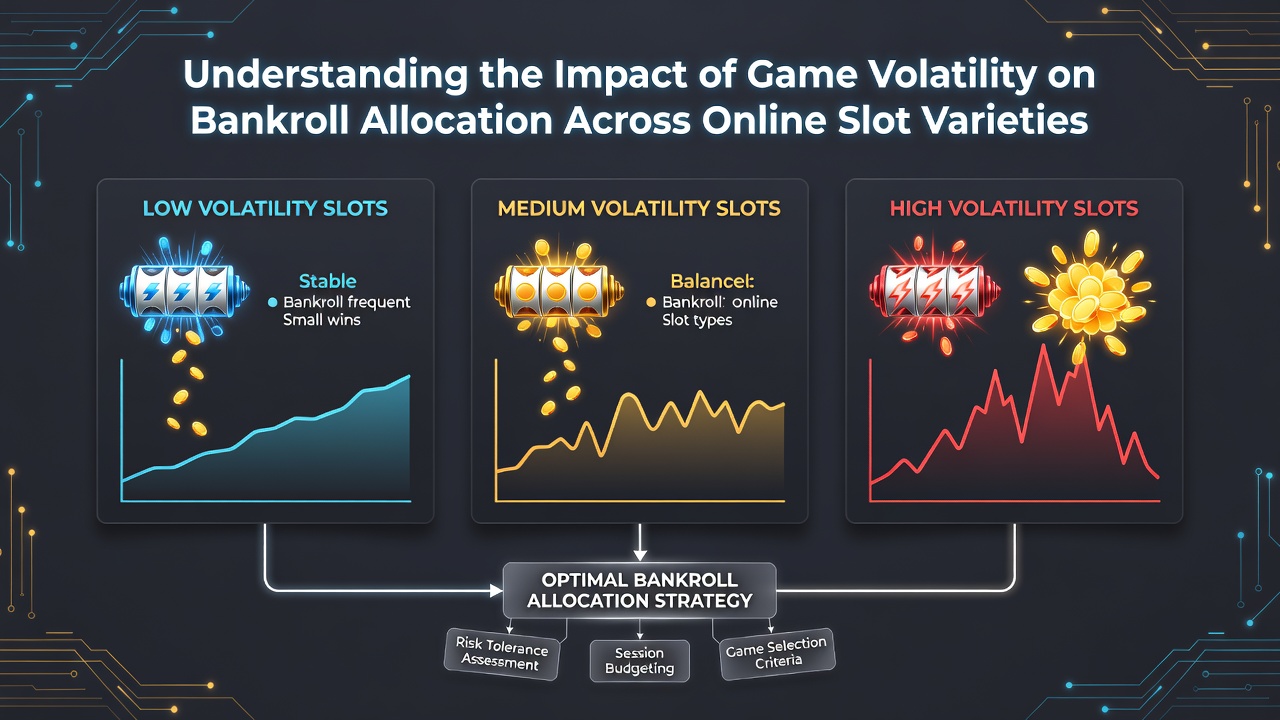
Volatility in online slots refers to the frequency and size of payouts that players encounter during sessions, and this factor directly shapes how bankrolls get divided among different game types. Low-volatility slots deliver smaller wins at regular intervals while high-volatility titles produce larger payouts but with extended dry spells, so allocation decisions follow patterns documented in industry reports. Medium-volatility options sit between these extremes and often require balanced approaches that account for both consistency and occasional spikes. Observers note that these differences become evident when data from regulatory bodies track session outcomes across thousands of spins.
Defining Volatility Levels in Slot Games
Game developers categorize slots by volatility ratings that appear in paytables or software descriptions, and these ratings guide initial bankroll splits. Low-volatility machines typically return 30 to 60 percent of wagers in smaller increments over short periods, whereas high-volatility models concentrate returns into infrequent but substantial hits that may exceed 100 times the bet size. Researchers at institutions such as the University of Nevada, Las Vegas have examined these patterns through simulation models, and their findings indicate that variance calculations help predict the number of spins needed before a return occurs. Medium-volatility games blend these traits, producing moderate wins every 20 to 50 spins on average according to aggregated play data.
Bankroll Allocation Methods by Volatility Type
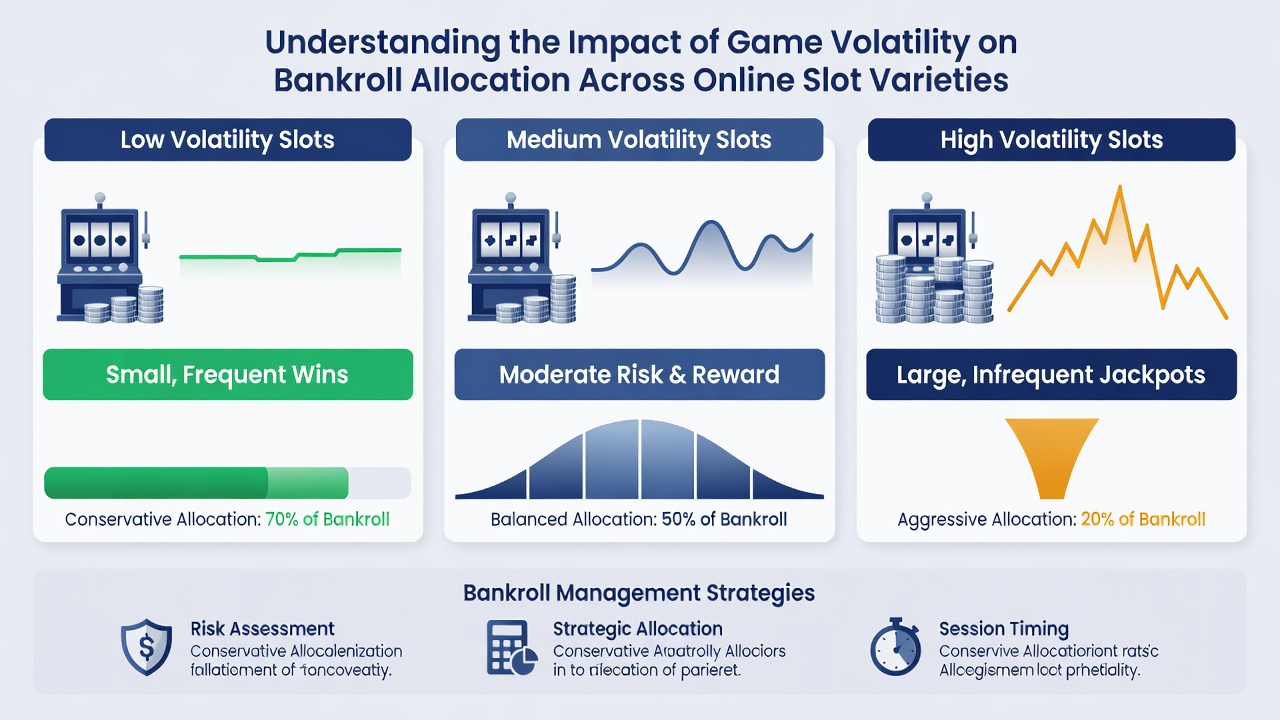
Players allocate portions of their total bankroll based on volatility because high-variance titles demand larger reserves to withstand sequences of non-paying spins that can extend beyond 100 rounds. Data from the Nevada Gaming Control Board shows that sessions on high-volatility slots often require at least 200 to 300 times the base bet to reach statistical equilibrium, while low-volatility games operate effectively with reserves closer to 50 to 100 times the stake. Allocation therefore starts with identifying the dominant game type in a session, then setting aside separate segments such as 60 percent for high-volatility exploration and 40 percent for steadier low-volatility play. Those who study these distributions report that cross-category mixing reduces overall drawdown risk when percentages adjust dynamically as session length increases.
Examples Across Popular Slot Categories
Classic three-reel slots usually fall into the low-volatility range and suit smaller, evenly distributed bankroll segments that support extended play without rapid depletion. Video slots wth five or more reels and multiple bonus features frequently register as medium or high volatility, prompting larger dedicated portions that cover both base game spins and feature triggers. Progressive jackpot titles almost always carry high volatility because their top prizes accumulate across networks, and allocation here often reserves a distinct slice equivalent to 30 percent of the session total to accommodate the long intervals between wins. Case studies compiled by analysts at the University of Sydney demonstrate that players who divide bankrolls proportionally to these categories maintain longer average session times before reaching preset loss limits.
Statistical Patterns and Regional Data Sources
Reports from the Pennsylvania Gaming Control Board track thousands of remote slot sessions and reveal that volatility-adjusted bankroll splits correlate with reduced variance in net outcomes over monthly periods. Similar patterns appear in data released by Canadian provincial regulators, where allocation models that reserve larger amounts for high-volatility games show fewer early session terminations. Academic analyses published through institutions in Australia further confirm that combining volatility ratings with bet sizing produces measurable differences in bankroll longevity, particularly when percentages shift monthly based on updated performance metrics. These sources collectively illustrate how allocation remains a mechanical response to documented payout distributions rather than random choice.
Adjusting Allocations Over Time
Bankroll divisions evolve as players review recent session logs that record win frequency and size per volatility tier, and adjustments typically occur after every 500 to 1000 spins. Software tools provided by many platforms display running volatility estimates, which allows real-time rebalancing such as moving 10 percent from one category to another when dry spells exceed expected lengths. Data sets collected across European markets indicate that such adaptive methods maintain bankroll integrity across extended play windows, especially when low-volatility segments receive incremental top-ups from high-volatility winnings. The process stays grounded in observable metrics that operators publish in game information panels.
Conclusion
Volatility categories in online slots establish clear parameters for bankroll allocation, and the resulting distributions follow patterns verified through regulatory data and academic modeling. Low-volatility titles support smaller reserves for steady engagement, high-volatility options require expanded segments to cover extended intervals, and medium-volatility games occupy the middle ground with flexible splits. Observers tracking these dynamics across regions note that proportional allocation based on documented variance levels produces consistent session structures, and ongoing review of performance figures allows refinements without reliance on external forecasts.