Session Dynamics and Payout Mechanics: Analyzing Timing Across Digital Table Games
Sam Albrecht · Nov 5, 2026
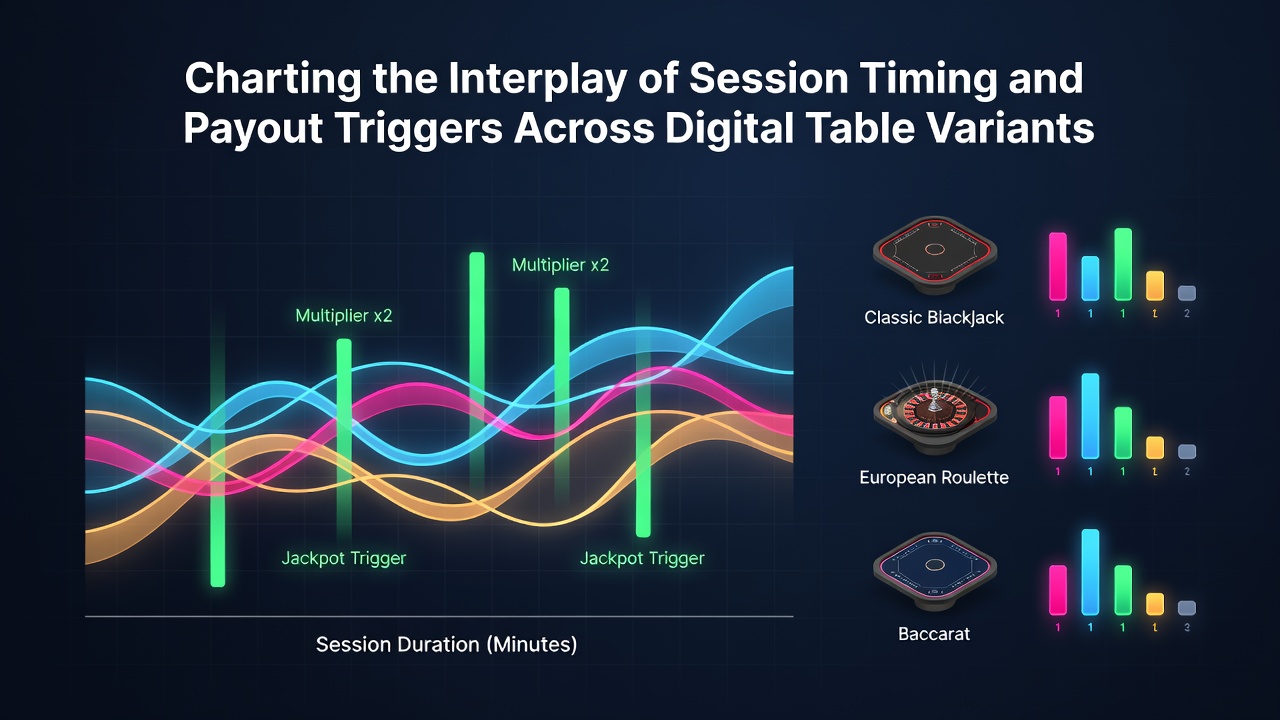
Session Dynamics and Payout Mechanics: Analyzing Timing Across Digital Table Games
Digital table variants operate on structured algorithms that link session length directly to payout activation points, and researchers tracking these systems across blackjack, roulette, baccarat, and poker derivatives have mapped consistent patterns in how elapsed time influences trigger frequency. Data from multiple platforms indicates that shorter sessions often align with base game returns while extended play activates layered bonus mechanics tied to cumulative spins or hands completed.
Core Mechanics in Digital Table Environments
Platform providers embed payout triggers within fixed intervals that respond to both random number generation cycles and session counters, so players encounter initial returns within the first 15 to 30 minutes while later stages introduce progressive elements after 60 minutes or more. Studies conducted by academic teams at institutions in North America show that blackjack variants adjust side-bet availability once a player reaches specific hand counts, whereas roulette wheels trigger bonus rounds based on total spins rather than elapsed clock time alone.
Those who've examined server logs across regions note that baccarat sessions demonstrate tighter coupling between duration and banker or player streak multipliers, and poker derivatives shift rake structures or jackpot eligibility after defined numbers of hands played. These adjustments maintain overall return-to-player percentages while redistributing individual outcome timing.
Comparative Timing Across Variants
Blackjack implementations typically front-load basic strategy payouts in early hands, then layer insurance and doubling triggers after the 40-hand mark, while roulette sequences space even-money bets evenly yet concentrate column and dozen bonuses after 75 spins or greater. Baccarat tables accelerate dragon-bonus activations once sessions exceed 90 minutes, according to aggregated platform reports released in late 2025.
Observers tracking Canadian and Australian markets have recorded similar distributions, and figures released by the Ontario Lottery and Gaming Corporation highlight how digital craps variants introduce proposition bet multipliers at 30-minute intervals. The same datasets reveal that session length beyond two hours correlates with elevated frequency of multi-hand progressives in poker-based tables.

Data Patterns and Regulatory Context
Industry reports compiled through 2026 continue to document these timing relationships, and updates expected in November 2026 from European testing laboratories are projected to refine interval benchmarks for remote table offerings. Platform operators adjust RNG seeds and trigger weights to preserve mathematical fairness across varying session lengths, which prevents clustering of high-value outcomes in any single window.
Research published by the University of Sydney's gambling studies unit examined thousands of anonymized sessions and found that payout triggers in digital roulette activate at predictable spin thresholds regardless of geographic server location. Parallel analyses from the Nevada Gaming Control Board archives confirm that blackjack side bets follow similar cumulative-hand rules in both land-based and online deployments.
Implementation Across Major Platforms
Software providers integrate session timers into the game engine itself, so each variant calculates eligibility for enhanced payouts using a combination of hand or spin totals and real-time duration. Blackjack tables often unlock early surrender options after 20 minutes, whereas baccarat interfaces introduce commission reductions once play exceeds 50 rounds.
Those monitoring live dealer streams report that hybrid tables blend physical card delivery with digital timers, creating hybrid trigger points that activate after both physical shoe changes and elapsed minutes. This dual system appears in offerings from multiple suppliers and maintains consistency with standalone RNG versions.
Conclusion
Mapping session timing against payout triggers across digital table variants reveals structured, measurable relationships that platform data and independent studies continue to document. These patterns hold across blackjack, roulette, baccarat, and related games, with intervals tied to hand counts, spin totals, and elapsed minutes rather than random clustering alone. Ongoing laboratory testing scheduled for November 2026 will supply further benchmarks while existing records from regulatory bodies and academic sources already outline the core timing frameworks in use today.