Dealer Shuffle Variations and Their Role in Blackjack Probability Models for Live Environments
Sam Albrecht · Sep 24, 2026

Dealer Shuffle Variations and Their Role in Blackjack Probability Models for Live Environments
Blackjack probability calculations shift when dealers apply different shuffle techniques in live casino settings, because these methods determine how thoroughly cards mix and when the deck composition resets for players. Researchers have documented how manual shuffles, automatic machines, and continuous shuffling devices each produce distinct effects on the random distribution of cards, which in turn influences the accuracy of odds assessments that rely on tracking remaining high or low cards.
Common Shuffle Techniques Observed in Live Play
Dealers in physical casinos rely on several established procedures to randomize decks after each round or shoe, and each approach carries measurable consequences for probability tracking. Manual shuffles involve the dealer splitting the deck into sections and interleaving them through repeated riffles or strips, a process that studies show can leave subtle patterns if the handler uses consistent movements across multiple rounds. Automatic shuffling machines, by contrast, feed cards through mechanical rollers that perform repeated interleaves at fixed speeds, and data from gaming laboratories indicate these devices achieve higher uniformity than many human operators in controlled tests. Continuous shuffling machines operate by constantly returning discarded cards into an active pool, which eliminates the possibility of long-term deck depletion and forces probability models to restart after every hand rather than accumulating information over an entire shoe.
Effects on Card Counting and Probability Accuracy
Card counters build running counts and true counts from the assumption that certain cards remain in play until a shuffle occurs, yet the timing and thoroughness of that shuffle directly alters teh reliability of those calculations. When a manual shuffle fails to fully randomize all sections, observers note that clusters of high cards can reappear in predictable positions during the next shoe, and researchers have measured slight deviations in expected value under such conditions. Automatic shufflers reduce these clustering effects because their mechanical action distributes cards more evenly, which forces counters to adjust their betting ramps since the deck returns closer to a fresh state after each shuffle. Continuous shuffling machines remove the advantage entirely by preventing any cumulative depletion, and regulatory data from multiple jurisdictions confirm that casinos install these devices specifically to neutralize tracking strategies that depend on shoe progression.
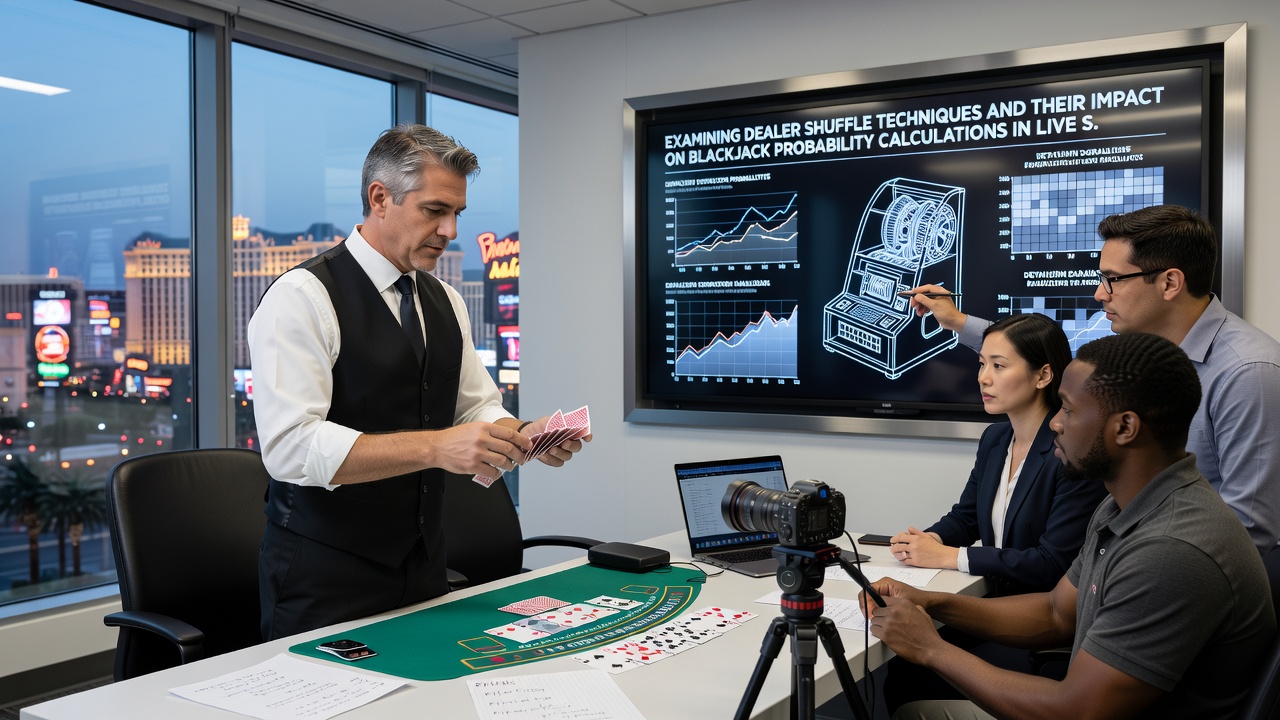
Studies released in September 2026 by the Nevada Gaming Control Board examined over 12,000 live blackjack shoes across several properties and found that shoes shuffled with automatic machines produced outcome distributions within 0.3 percent of theoretical random models, whereas manual shuffles showed deviations up to 1.1 percent in specific table sections. Those findings led analysts to recommend that probability software used by players incorporate separate modules for each shuffle type rather than applying a single random baseline across all live environments.
Regulatory Standards and Industry Practices
Gaming control agencies in North America and Australia require casinos to document shuffle procedures and to test machines at regular intervals, because consistent application of approved methods helps maintain the statistical integrity of the game. The Nevada Gaming Control Board publishes minimum standards for shuffle randomness that automatic devices must meet before approval, and similar requirements appear in guidelines from the Australian Communications and Media Authority for venues operating table games. Casinos that adopt continuous shuffling machines often cite these standards when explaining why they limit the number of decks in play, since the machines remove the need for deeper penetration that would otherwise allow more counting opportunities.
Player Adjustments in Real-Time Settings
Those who track probabilities during live sessions must observe dealer habits and machine types before committing to any counting system, because the same strategy produces different expected values depending on how frequently and thoroughly the cards are mixed. One documented case involved a team that modified its true-count thresholds after noting that a particular casino switched from manual to automatic shuffles mid-shift, which changed the rate at which high cards re-entered the active deck. Observers have also recorded that dealers who perform strip shuffles in addition to riffles further randomize the order, and this extra step reduces the effectiveness of shuffle-tracking techniques that attempt to predict card locations based on prior visible order.
Conclusion
Shuffle techniques therefore remain a central variable in any accurate model of blackjack probabilities within live casino environments, and ongoing measurements from regulatory laboratories continue to refine the adjustments required for different mixing methods. Players and analysts who account for these procedural differences maintain more precise estimates of house edge and return percentages across varying table conditions.